Stamped Concrete Bendigo: Slate, Flagstone And Cobblestone Patterns Pressed Into The Slab
Stamped concrete gives the appearance of laid stone, slate or pavers in a single continuous slab, which is the whole point of it: the look of units without the joints, the weeds, the ants or the individual pieces that sink and rock. Peak Concreting Bendigo lays stamped driveways, patios, alfresco areas, pool surrounds and entries across the region, pressing rubber pattern mats into the slab while it is still plastic so the texture is a real three-dimensional impression rather than a pattern of colour. Patterns run from random slate and flagstone through cobblestone, brick running bond and herringbone to timber plank, with a base colour batched through the mix or broadcast as a colour hardener and a release agent leaving a second tone in the low points, which is what makes the result read as natural stone. Stamping has one window in which the slab will take an impression, so these pours are timed around the forecast and crewed to finish inside it. Sealing is part of the job. Quoted in writing per square metre. Call 0485 072 026.
GET A FREE QUOTE
Peak Concreting Bendigo
Stamped Concrete Driveways In Bendigo, Plus Patios, Alfresco And Pool Surrounds
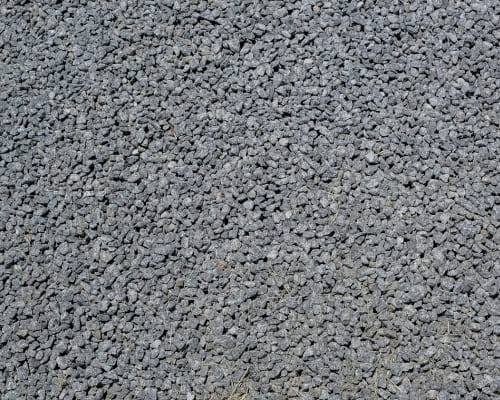
Stamped concrete gives the appearance of laid stone, slate or pavers in a single continuous slab, which is the whole reason it is chosen: the look of units without the joints, the weeds, the ants or the individual pieces that sink and rock.
Stamped concrete driveways
A driveway is the largest and most common stamped job, and the one where the economics work best, because the alternative is paving a big area in individual units. A stamped driveway is a normal reinforced slab with the pattern pressed into the surface while it is still plastic, so it carries vehicle loads like any other driveway while reading as flagstone or cobble from the street. Pattern scale matters here more than anywhere: a fine brick pattern looks busy across a wide drive, while a large random flagstone reads properly at that size. Slab construction is on the concrete driveways page.
Patios and alfresco areas
A patio or covered alfresco is where stamped work is seen close up and slowly, so pattern detail and colour subtlety repay the spend. A sheltered area also holds its colour and sealer far longer than open ground, which makes it the lowest-maintenance place to put a decorative finish. Running one pattern from an internal threshold out through the alfresco makes both spaces read as larger.
Pool surrounds
Around a pool, texture is an advantage: the relief pressed into a stamped surface gives grip underfoot where a smooth slab would be dangerous when wet. Two things change the specification. The sealer has to be rated for chlorinated and salt water and must not be a gloss film, and the colour should sit in the mid-to-light range because a dark stamped surround gets uncomfortably hot in a Bendigo January.
Paths, entries and courtyards
Small areas are where stamped concrete is most affordable in absolute terms, and a patterned front entry changes the look of a frontage for a modest sum. On a narrow path, the pattern is set out so the repeat runs sensibly along the length rather than being cut awkwardly at the edges, which is a layout decision made before the pour rather than during it.
Peak Concreting Bendigo
Stamped Concrete Patterns: Slate, Flagstone, Cobblestone, Timber And Brick
The pattern is chosen from mat sets, and the choice is about matching the house and the scale of the area rather than about cost, since most patterns price the same.
Slate and flagstone
Random slate and flagstone are the most popular patterns in the region. They have an irregular, natural joint layout with no repeating grid, which hides the mat seams better than any geometric pattern and reads convincingly across a large area. Ashlar slate, a more regular rectangular version, suits a formal frontage where a random layout would look untidy.
Cobblestone and European fan
Cobblestone patterns imitate set stone in a tight repeat, and the European fan or circular cobble layout is used as a feature at an entry or in the centre of a courtyard. These are small-scale patterns, so they suit paths, entries and courtyards and tend to look restless across a full driveway.
Brick and paver patterns
Running bond, herringbone and basket weave brick patterns are the obvious choice where the house is brick, because the stamped surface can be coloured to pick up the actual brickwork. A herringbone reads as a laid paver drive from the street at a fraction of what paving the same area would cost.
Timber plank and seamless texture
Timber plank mats press a boarded appearance into the slab, which suits a deck-like alfresco where a real timber deck would rot or need annual oiling. Seamless texture mats add a subtle stone grain with no joint pattern at all, used where the aim is to lose the flat trowelled look without imitating units.
Choosing scale and seeing a sample
The two rules that matter: match the pattern scale to the area, and match the colour to the house rather than to the mat catalogue. Sample panels are stamped on site before committing, because a pattern reads completely differently at full size on the ground than it does as a photograph of a mat.
Peak Concreting Bendigo
Stamped, Stencilled Or Pressed Concrete: The Names And What Differs
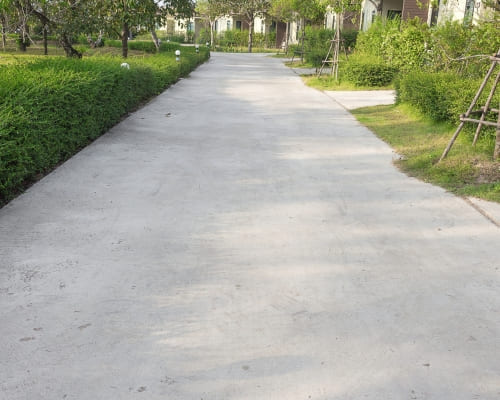
Three names get used almost interchangeably for patterned concrete, and they are not the same product. Knowing which is being quoted is the single most useful thing to understand before comparing prices.
Stamped concrete
Stamping presses rubber mats into fresh, plastic concrete, so the pattern is a genuine three-dimensional impression with real depth and texture. Because the relief is in the concrete itself, it survives wear and keeps its grip. It has to be done inside the window while the slab is workable, which is what makes it the most skill-dependent and the most expensive of the three.
Stencilled concrete
Stencilling lays an adhesive paper stencil onto the surface and colours the concrete around it, then lifts the stencil to leave the joint lines in a contrasting tone. The result is essentially flat, a pattern of colour rather than of texture. It is quicker and cheaper than stamping and reads well from a distance, which makes it common on driveways, but it has little relief underfoot.
Pressed concrete
Pressed concrete is the term most often used in Australia as a plain synonym for stamped, and in practice a quote for pressed concrete usually means stamped. It is occasionally used loosely for either, so it is worth confirming whether a pressed quote includes mats pressed into the slab or a stencil laid on it, because the two are different jobs at different prices.
Which to choose
For a surface walked on barefoot or sloped enough to need grip, stamping earns its premium because the texture is real. Where the aim is the look of pavers across a large driveway at the lowest cost, stencilling is the sensible choice. Both are quoted where a job could go either way, with the method stated on the quote rather than left as 'patterned concrete'.
Peak Concreting Bendigo
How Stamped Concrete Is Laid, Coloured, Released And Sealed
Stamped concrete is a timing job. The slab has one window in which it will take an impression, and everything is staged around hitting it.
Pour, screed and base colour
The slab is poured, screeded and floated on its prepared base with the reinforcement chaired, exactly as any other. Base colour goes in either as oxide batched through the mix, which colours the full depth, or as a dry-shake colour hardener broadcast onto the surface and floated in, which gives a more intense colour and hardens the surface at the same time. Dry shake is the usual choice under stamping. Colouring methods are covered on the coloured concrete page.
Release agent and the secondary colour
A powdered or liquid release agent is applied before the mats go down. It does two jobs: it stops the mats sticking and lifting the surface, and it leaves a secondary tone in the low points of the texture once the excess is washed off. That two-tone, antiqued effect is what makes stamped work read as natural stone rather than as moulded concrete, so the release colour is chosen as deliberately as the base colour.
Stamping the pattern
The mats are laid and pressed, usually with a tamper, working in sequence across the slab so no area is reached too late. This is where experience shows and where there is no second attempt: too early and the impression closes up or the mat sinks, too late and the concrete will not take the pattern at all. A hot windy Bendigo afternoon shortens that window considerably, so these pours are timed around the forecast and crewed to finish inside it.
Cutting joints, washing off and sealing
Control joints are still required, and on a stamped slab they are cut to follow a pattern line wherever possible so they disappear into the design instead of running across it. The release agent is then washed off to the degree of antiquing wanted, and once cured the surface is sealed, which protects the colour, deepens the two-tone effect and makes the texture washable. Sealing is part of the job, and resealing every three to five years is the ongoing maintenance, covered on the concrete sealing page.
Peak Concreting Bendigo
Stamped Concrete Bendigo Cost Per Square Metre, And Stamped Or Pavers
Stamped concrete Bendigo work is priced per square metre and sits at the upper end of decorative concrete, because the pattern adds colour, release, mats and a great deal more labour inside a fixed time window. The figures below are indicative for the Bendigo area; a written quote on site replaces them with a fixed price.
Indicative cost per square metre
A stamped driveway or patio generally runs from around $150 to $220 per square metre, against roughly $85 to $120 for plain or broom-finished concrete, $105 to $165 for coloured and $120 to $170 for exposed aggregate. Stencilled concrete sits lower, commonly $110 to $160, which is the main practical reason it gets chosen over stamping on a large area. A complex pattern, a strong colour, a small area or difficult access all push toward the top of the range.
What moves the price
Area is the biggest factor, because stamping has a high fixed set-up and the rate per square metre falls considerably on a large continuous pour. After that: the pattern and how much mat handling it needs, the colouring method, excavation and spoil removal, slab thickness and mesh for the loads expected, truck and pump access, demolition of an existing surface, and any crossover work.
Stamped concrete or pavers
This is the comparison that decides most jobs. Installed cost is often comparable, and pavers can be cheaper on a small area. The differences show afterwards. Stamped concrete is one continuous slab, so there are no joints for weeds or ants, no sand to wash out, and no individual units to sink, rock or need relaying. Pavers can be lifted and replaced individually, which stamped concrete cannot, and they do not need resealing. Stamped work needs its sealer kept current; pavers need their joints kept weeded.
Stamped concrete or exposed aggregate
Both cost more than plain. Stamped gives a designed, patterned look and needs a sealer to hold its two-tone colour. Exposed aggregate gives a natural stone texture, is more forgiving of wear because the traffic runs on hard stone faces, and is the more robust choice on a steep driveway. Samples of both are laid on site side by side before deciding. Call 0485 072 026.
TESTIMONIALS
What Our Stamped Concrete Customers Say About Us
The Process
3 Step Process For Your Stamped Concrete Needs

Free Quote
A call or a form message starts it. A site visit follows to measure up, check access and assess the ground or the existing slab, and a fixed written price comes back with the scope spelled out.

Preparation
Preparation is matched to the job quoted: excavating and compacting a base and setting formwork and steel for a new pour, or grinding, cleaning and priming the surface where the work goes over concrete already in the ground.

Finish And Clean-Up
The chosen finish is worked and then protected, with joints cut and curing managed on a new pour or the surface sealed on an overlay or polish, and the site left clean and ready to use.
Stamped Concrete In Bendigo
FREQUENTLY ASKED QUESTIONS
Everything you need to know about our Stamped Concrete In Bendigo
How much does stamped concrete cost in Bendigo?
As an indicative guide, a stamped driveway or patio runs from around $150 to $220 per square metre in the Bendigo area, against roughly $85 to $120 for plain or broom-finished concrete, $105 to $165 for coloured and $120 to $170 for exposed aggregate. Stencilled concrete is cheaper at around $110 to $160, which is the main reason it is often chosen over stamping on a large driveway. Area is the biggest driver because stamping carries a high fixed set-up, followed by the pattern, the colouring method, access and excavation. Every job is quoted in writing. Call 0485 072 026.
What is the difference between stamped, stencilled and pressed concrete?
Stamping presses rubber mats into fresh plastic concrete, so the pattern is a genuine three-dimensional impression with real depth and texture that survives wear and gives grip. Stencilling lays an adhesive paper stencil on the surface and colours around it, leaving joint lines in a contrasting tone, so the result is essentially flat, a pattern of colour rather than texture. It is quicker and cheaper. Pressed concrete is the term most often used in Australia as a plain synonym for stamped, though it is sometimes used loosely for either, so it is worth confirming which a pressed quote actually includes. Call 0485 072 026.
Is stamped concrete slippery?
Less so than a smooth trowelled slab, because the relief pressed into the surface gives genuine texture underfoot, which is why it is a sound choice around a pool. The risk comes from the sealer rather than the concrete: a high-gloss film reduces grip when wet. Around pools, on sloped driveways and in any area that gets wet, a matte sealer or one with an anti-slip additive is specified instead of a gloss, and the sealer type is named on the quote. Stencilled concrete, being essentially flat, has less inherent grip than stamped. Call 0485 072 026.
Does stamped concrete crack, and how is that managed?
The slab beneath can crack like any concrete, because stamping is a surface treatment and the concrete underneath behaves normally. Shrinkage cracking is managed the same way as on any slab, with control joints cut to about a quarter of the slab depth. The difference on stamped work is placement: joints are cut to follow a pattern line wherever possible so they read as part of the design rather than as a line across it. Correct base compaction, adequate thickness, chaired reinforcement and sensible joint spacing on Bendigo's reactive clay are what keep cracking to a minimum. Call 0485 072 026.
Is stamped concrete better than pavers?
Installed cost is often comparable, and pavers can be cheaper on a small area, so the decision is usually made on what happens afterwards. Stamped concrete is one continuous slab, so there are no joints for weeds or ants, no bedding sand to wash out, and no individual units to sink, rock or need relaying. Pavers can be lifted and replaced individually, which stamped concrete cannot, and they never need resealing. Stamped work needs its sealer kept current every three to five years; pavers need their joints kept weeded. Neither is universally better. Call 0485 072 026.
How do I maintain stamped concrete?
Day to day it needs nothing more than sweeping and a hose or gentle pressure wash, and the texture hides general marking well. The one real maintenance item is the sealer, which protects the base and release colours, deepens the two-tone antiqued effect and keeps the texture washable. It breaks down under ultraviolet light and traffic, so a stamped driveway in full Bendigo sun is typically resealed every three to five years, and a covered alfresco considerably less often. The tell is the colour looking flat and water no longer beading. Acid cleaners strip sealer and should be avoided. Call 0485 072 026.
Request A Free Stamped Concrete Quote
GET A FREE QUOTE
BUSINESS
SERVICES
OPERATING HOURS
Sun: 6:00am - 10:00pm
Mon: 6:00am - 10:00pm
Tue: 6:00am - 10:00pm
Wed: 6:00am - 10:00pm
Thu: 6:00am - 10:00pm
Fri: 6:00am - 10:00pm
Sat: 6:00am - 10:00pm