Honed Concrete Bendigo: Matte Ground-Stone Driveways, Pool Surrounds, Patios And Floors
Honed concrete gives the sleek contemporary look of a polished floor in a matte finish that works outdoors, where a high gloss would be slippery and would dull under the weather. Peak Concreting Bendigo creates honed driveways, pool surrounds, alfresco areas, entrances, paths and interior floors across the region, mechanically grinding the cured surface flat to expose a fine, even scatter of sand and stone for a refined natural look that keeps grip underfoot. Nothing is applied to make the finish, so there is no coating to peel or flake: the surface is the slab itself. It is the usual choice for a modern home wanting clean seamless outdoor surfaces with none of the joints, weeds or sinking units that pavers bring. Twelve years of decorative concrete work across the region keeps the grind even, the stone exposure consistent and the surface densified and sealed against marks and stains. Sample panels are ground on site before anything is committed. Every job is quoted in writing. Call 0485 072 026.
GET A FREE QUOTE
Peak Concreting Bendigo
Honed Concrete Bendigo: What The Finish Is, And Honed Or Polished
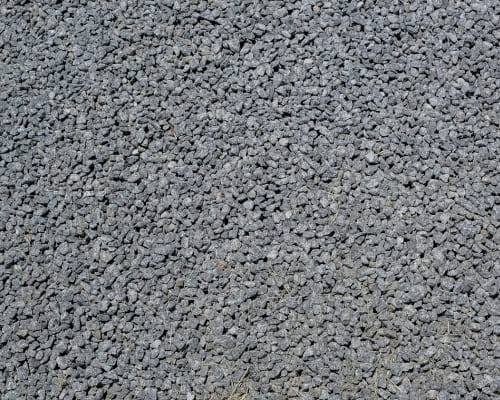
Honed concrete Bendigo work sits between plain concrete and a polished floor, and the distinction is worth getting right before choosing, because the two are often used as if they mean the same thing.
What honing actually does
Honing is mechanical. Diamond-segmented discs grind the cured surface flat, cutting away the soft cement paste on top and bringing up a fine, even scatter of sand and stone. The grinding stops at a matte or low-sheen level rather than continuing to a reflective one. Nothing is applied to create the look; the finish is the slab itself, which is why there is no coating to peel, flake or delaminate.
Honed or polished
Both start the same way and the difference is where the grinding stops. Polishing carries on through progressively finer diamond grits until the concrete becomes reflective, giving a satin to mirror surface. Honing stops earlier, leaving the stone exposed with no shine. Appearance aside, the practical difference is grip: a honed surface keeps traction when wet, a high-gloss polished one does not. That single fact decides most jobs. Internal living areas take a polished concrete finish; anywhere water lands takes honed.
Honed or exposed aggregate
Both expose stone, but by opposite means. Exposed aggregate washes the paste off while the concrete is green, leaving the stone standing proud in an open, coarse texture. Honing grinds the cured slab flat, so the stone is cut through and sits flush in a smooth plane. Honed reads as refined and contemporary; exposed aggregate reads as textured and robust. Honed is easier to sweep and kinder to bare feet; exposed aggregate has more grip on a steep slope.
Honed or pavers
A honed slab is one continuous surface. There are no joints for weeds or ants, no individual units to sink or rock, and no sand to wash out. Pavers win on the ability to lift and relay a section; honed concrete wins on everything to do with maintenance and on the seamless look a modern build is usually after.

Peak Concreting Bendigo
Honed Concrete Driveways In Bendigo
A honed driveway is the most demanding application of the finish and the one that shows workmanship most clearly, because it is a large uninterrupted area in full sun seen from the street every day.
Why a honed driveway works
Grinding removes the soft paste layer that scuffs, dusts and scales under turning tyres, so traffic runs on cut stone faces instead. The flat plane sheds dirt rather than trapping it, which is the main complaint about exposed aggregate out the front. The matte level is chosen deliberately: a honed driveway is never taken to high gloss, because a wet sloped driveway with a reflective surface is a hazard.
Slab specification underneath
A honed driveway is poured at 100mm on 100mm of compacted crushed rock with SL72 mesh chaired into the middle third, stepping up in thickness and mesh weight where a caravan or truck uses it. The slab matters more than usual here, because grinding exposes the top of the slab and any variation in the mix or the finish becomes visible. Construction detail sits on the concrete driveways page.
Joints on a decorative driveway
Control joints still have to be cut, because concrete still shrinks. On a honed driveway their layout becomes a design decision rather than an afterthought: they are set out symmetrically and in line with the house, the garage openings and the path lines, so the pattern reads as deliberate. A joint grid that fights the geometry of the building is the most common avoidable fault.
Grinding an existing driveway
An existing driveway can be honed, provided it is structurally sound. What comes up is whatever stone is already in that pour, which is unknown until the first pass, so the work is quoted to a stated grind level rather than to a guaranteed appearance. Where the slab has cracked or dropped, honing it is pointless until the cause is dealt with, and that is covered on the concrete repairs page.
Peak Concreting Bendigo
Honed Concrete Pool Surrounds, Patios And Alfresco Areas
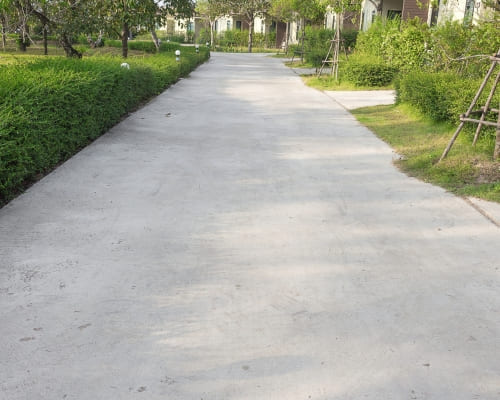
Away from the driveway, honed concrete is specified for exactly one reason more than any other: it gives the ground-stone look in the places where a polished surface would be unsafe.
Pool surrounds
A honed finish around a pool is the standard specification and the single most common reason the finish gets chosen in Bendigo. The matte surface keeps traction when wet, it stays comfortable under bare feet because there is no coarse texture, and it resists chlorinated and salt water once sealed with a product rated for it. Lighter stone and paste tones reflect heat and stay noticeably cooler through a Bendigo summer than charcoal does, which matters on a surface people stand on barefoot in January. Falls are set so splash-out runs to drainage rather than back into the pool.
Patios and alfresco areas
A honed patio or alfresco is usually the continuation of an internal floor, and running the same grind level inside and out makes both spaces read as larger. Under a roofline the surface sees far less ultraviolet and rain, so a slightly higher sheen is safe there than on open ground. Where the area runs out past the roofline, the exposed section is normally held at a flatter matte level.
Entries, paths and courtyards
Entries and courtyards are small, sheltered and seen close up, so they take the most refined version of the finish. Because the areas are small, the step up from a broom finish to honed costs much less in absolute terms than it would across a driveway, which is why it is often chosen for a front entry even when the driveway is plain.
Where exposed aggregate is the better answer
On a steep driveway or a service path in constant wet use, open texture beats a flat plane for grip, and exposed aggregate is the more sensible specification. Samples of both are ground and laid side by side on site before a decision, because the difference is far clearer underfoot than in a photograph.
Peak Concreting Bendigo
How Concrete Is Honed, Sealed And Maintained, On A New Pour Or An Existing Slab
Honing is a grinding sequence, and the result depends on how deep the cut goes and how consistently it is held across the whole area.
On a new pour
The slab is poured, finished and then left to cure properly, normally around 28 days, before grinding starts. Honing green concrete tears the surface rather than cutting it. Once cured, successive diamond grits take the surface flat and open the stone, stopping at the agreed matte or low-sheen level rather than continuing into a polish.
Grind level and how much stone shows
Depth of cut sets the look. A shallow cut stays largely in the paste and shows a fine scatter of sand with little stone, giving the most uniform and subtle result. A medium cut brings up the sand and the tips of the aggregate, which is what most Bendigo jobs choose. A deep cut exposes the stone faces almost fully for a terrazzo-like surface. Deeper cuts need more passes and more consumables, so grind level moves the price as much as it moves the appearance.
Honing an existing slab, and honed interior floors
Existing concrete can be honed, inside or out, once any floor coverings, adhesive, tile beds, paint or old sealer have been stripped off. That removal is quoted separately because what sits underneath an old covering is rarely known in advance. Honed interior floors are a common renovation result: a matte ground floor suits a kitchen, laundry, bathroom or entry where a gloss finish would be slippery when wet, and it is the same slab the house already stands on rather than a new floor covering.
Densifying, sealing and upkeep
A chemical densifier is worked in partway through the grit sequence, reacting with the free lime in the concrete to harden the surface from within, which is what makes a honed floor abrasion-resistant rather than merely flat. A penetrating sealer follows to resist oil, wine and leaf tannin staining. Neither forms a film. Day to day the surface wants sweeping and a damp mop with a pH-neutral cleaner, and the sealer is topped up every few years outdoors where ultraviolet light breaks it down. Acidic cleaners and bleach etch the surface and should be avoided.
Peak Concreting Bendigo
What Honed Concrete Costs In Bendigo Per Square Metre
Honed concrete is priced per square metre, and it sits above plain concrete and exposed aggregate because the grinding is an additional stage carried out after the slab has cured. The figures below are indicative for the Bendigo area; a written quote on site replaces them with a fixed price.
Indicative cost per square metre
A honed finish on a new residential pour typically runs from around $140 to $200 per square metre all up, against roughly $85 to $120 for plain or broom-finished concrete and $120 to $170 for exposed aggregate. Honing an existing sound slab, where no new concrete is needed, is cheaper and generally falls between about $70 and $120 per square metre, plus the cost of stripping any old coverings.
What moves the price
Grind level is the largest factor, since every additional pass is machine time and diamond consumables. After that: whether a new slab is being poured or an existing one ground, the condition of that existing slab, total area, because set-up and machine transport are fixed costs spread across it, access for grinders and extraction gear, and the sealer specified, with pool-rated and ultraviolet-stable products costing more.
Measured against the alternatives
Against pavers, honed concrete is usually comparable to lay and cheaper to own, with no joints to weed, no units to relift and no sand to replace. Against a polished floor it is slightly cheaper, because the grit sequence stops earlier. Against plain concrete it costs more at the outset and avoids the scuffing and dusting that makes a plain slab look tired within a few years.
Peak Concreting Bendigo grinds sample panels on the actual slab before quoting, because the stone in that pour decides the result. Call 0485 072 026.
TESTIMONIALS
What Our Honed Concrete Customers Say About Us
The Process
3 Step Process For Your Honed Concrete Needs

Free Quote
A call or a form message starts it. A site visit follows to measure up, check access and assess the ground or the existing slab, and a fixed written price comes back with the scope spelled out.

Preparation
Preparation is matched to the job quoted: excavating and compacting a base and setting formwork and steel for a new pour, or grinding, cleaning and priming the surface where the work goes over concrete already in the ground.

Finish And Clean-Up
The chosen finish is worked and then protected, with joints cut and curing managed on a new pour or the surface sealed on an overlay or polish, and the site left clean and ready to use.
Honed Concrete In Bendigo
FREQUENTLY ASKED QUESTIONS
Everything you need to know about our Honed Concrete In Bendigo
What is the difference between honed and polished concrete?
Both are ground with diamond tooling to cut away the soft cement paste and expose the stone, and the difference is where the grinding stops. Polishing continues through progressively finer grits until the concrete itself becomes reflective, giving a satin to mirror finish. Honing stops earlier, leaving a flat matte or low-sheen surface with the stone exposed but no shine. The practical consequence is grip: a honed surface keeps traction when wet, so it is the right specification for pool surrounds, patios, entries and anywhere water lands, while polishing suits internal living areas. Samples of both are ground on site before choosing. Call 0485 072 026.
Is honed concrete slippery around a pool?
No, and that is the main reason it is specified there. Honing leaves a flat matte surface rather than a reflective one, so it keeps traction underfoot when wet, unlike a high-gloss polished floor. It also has no coarse open texture, which makes it comfortable on bare feet in a way exposed aggregate is not. Around a pool it is sealed with a product rated for chlorinated and salt water, and falls are set so splash-out runs to drainage rather than back into the pool. Lighter stone and paste tones stay noticeably cooler underfoot through a Bendigo summer. Call 0485 072 026.
How much does honed concrete cost in Bendigo?
As an indicative guide, a honed finish on a new residential pour runs from around $140 to $200 per square metre all up in the Bendigo area, against roughly $85 to $120 for plain concrete and $120 to $170 for exposed aggregate. Honing an existing sound slab, with no new concrete required, is cheaper at around $70 to $120 per square metre plus the cost of stripping any old coverings. Grind level is the biggest driver, followed by whether the slab is new or existing, total area, access for the grinding gear and the sealer specified. Call 0485 072 026.
Can an existing concrete slab be honed?
Usually yes, provided it is structurally sound. Any floor coverings, adhesive, tile beds, paint or old sealer have to be removed first, and that stripping is quoted separately because what sits under an old covering is rarely known in advance. Once the slab is exposed it is checked for cracking, patching, old saw cuts and lipping. The work is quoted to a stated grind level rather than to a guaranteed appearance, because the aggregate in that particular pour decides what comes up. Where the slab has cracked or dropped, the cause is dealt with before any grinding. Call 0485 072 026.
How long does a honed concrete surface last?
Decades, when the slab beneath it is built properly, because the finish is the concrete itself rather than a coating that can peel or delaminate. Lifespan is decided by the slab: a correctly compacted base, the right thickness for the loads, chaired reinforcement and sensible joint spacing are what prevent the cracking and settlement no finish survives. On Bendigo's reactive clay the base is the part worth paying for. The sealer is the only maintenance item, protecting appearance rather than structure, and a worn honed surface can be reground rather than replaced. Call 0485 072 026.
How soon after pouring can concrete be honed?
The slab needs to cure properly first, normally around 28 days, because grinding green concrete tears the surface rather than cutting it cleanly and gives a patchy, inconsistent result. That means a honed job is two visits: the pour, then the grinding sequence once the concrete has reached strength. In the interim the slab is protected from staining, since oil or rust marks driven into fresh concrete can still show after grinding. Weather affects curing, so the exact return date is confirmed rather than promised in advance. Call 0485 072 026.
Request A Free Honed Concrete Quote
GET A FREE QUOTE
BUSINESS
SERVICES
OPERATING HOURS
Sun: 6:00am - 10:00pm
Mon: 6:00am - 10:00pm
Tue: 6:00am - 10:00pm
Wed: 6:00am - 10:00pm
Thu: 6:00am - 10:00pm
Fri: 6:00am - 10:00pm
Sat: 6:00am - 10:00pm