Concrete Edging Bendigo: Garden Edging, Mower Strips, Driveway Kerbs And Commercial Kerbing
Concrete kerbing and edging is the finishing touch that keeps a garden sharp and a driveway tidy for years. Peak Concreting Bendigo forms garden edges, mower strips, driveway kerbs, pin and edge strip kerbs and commercial kerbing across the region, giving a clean permanent line between lawn, beds, paths and driveways that will not rot, rust or go brittle the way timber, steel and plastic edging do. A low flush mower strip lets the mower wheel run straight over it and clears the edge in one pass; a raised border holds back mulch and soil and stops couch and kikuyu runners crossing into beds; a reinforced kerb protects the weakest part of a driveway slab. Because concrete is formed rather than laid in units, a curve costs the same per metre as a straight run. Runs are laid hand-formed where the geometry needs it or machine extruded where a long consistent profile suits, on a properly prepared and compacted base with the organic material stripped out. Quoted per linear metre, in writing. Call 0485 072 026.
GET A FREE QUOTE
Peak Concreting Bendigo
Concrete Garden Edging And Mower Strips For Bendigo Gardens
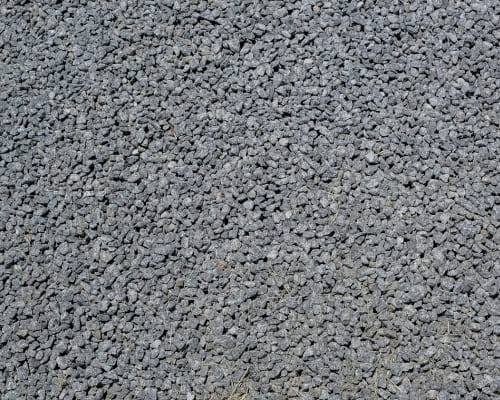
Garden edging is the most requested kerbing job on a Bendigo property, and the reason is maintenance rather than looks. A permanent concrete line between lawn and garden stops the two migrating into each other, which is what creates the ragged edge that has to be re-cut by hand every few weeks.
Mower strips
A mower strip is a low, flush concrete band laid at lawn level so the mower wheel runs straight along it and the blade clears the edge in one pass. It removes edging as a separate chore entirely. Width is set by the mower, commonly 100mm to 150mm, and the top is finished dead level with the turf rather than proud of it, because a strip even 10mm high catches the mower deck.
Raised garden borders
Where mulch, soil or gravel has to be held back, the edge is formed higher, typically 75mm to 150mm above the surrounding level. A raised border keeps mulch off the lawn after rain, stops couch and kikuyu runners crossing into beds, and gives a garden a defined shape that survives the seasons. The back face is kept vertical so the bed can be filled right up to it.
Curves, circles and tree rings
Concrete is formed rather than laid in units, so a curve is no harder than a straight run and costs the same per metre. That is the main advantage over pavers or blocks, which have to be cut or gapped around a radius. Flexible formwork takes a smooth continuous curve, and tree rings and circular beds are formed the same way.
Why concrete outlasts timber, plastic and steel
Timber edging rots and is eaten out from below, plastic goes brittle in Bendigo's ultraviolet and lifts at the joins, and steel rusts at ground level where it is permanently damp. Concrete does none of those things. It is poured as one continuous element with no joints for runners to find, and it stays where it was put rather than being pushed out of line by root growth.

Peak Concreting Bendigo
Concrete Edging Bendigo: Profiles, Heights And Finishes To Choose From
Concrete edging Bendigo work is specified by profile, height and finish, and those three choices between them set both the look and the price.
Profiles
The common profiles are a flat strip, which sits flush and suits a mower strip; a square or rectangular upstand, which is the standard garden border; a bullnose, with the top edge rounded off so there is no sharp arris to chip or catch; and a half-round or roll-top, which reads softer and is often chosen along a front garden. A chamfered top is a middle option that sheds water and resists chipping without the cost of a full bullnose.
Heights and widths
Flush strips run 100mm to 150mm wide. Garden borders are usually 100mm wide at 75mm to 150mm high. A driveway kerb is wider and deeper again because it has to take a wheel. Height is chosen against what the edge has to retain: 75mm holds mulch, 150mm holds a built-up bed, and anything that has to hold back more than about 200mm of soil stops being edging and becomes a retaining wall, with the engineering that goes with it.
Finishes and colour
A plain steel-trowelled or lightly broomed grey finish is the standard and the cheapest. Oxide colour can be added through the mix to pick up the house or the paving, with charcoal and terracotta the usual choices locally. A stencilled or stamped top gives a brick or cobble appearance along the run, and exposed aggregate can be washed back on a wider edge for texture. Because the areas are small, the step up to a decorative finish costs little in absolute terms.
Joints and reinforcement
Even a small element shrinks, so control joints are tooled at regular intervals along the run, usually every 1 to 1.5 metres, to keep cracking in straight planned lines. A single reinforcing bar is run through a garden edge, and heavier edges and kerbs take bar or mesh, so the element holds together as one piece rather than breaking into segments the first time something drives over it.
Peak Concreting Bendigo
Driveway Kerbs, Pin Kerbs, Edge Strip Kerbs And Precast Or Poured Kerbing
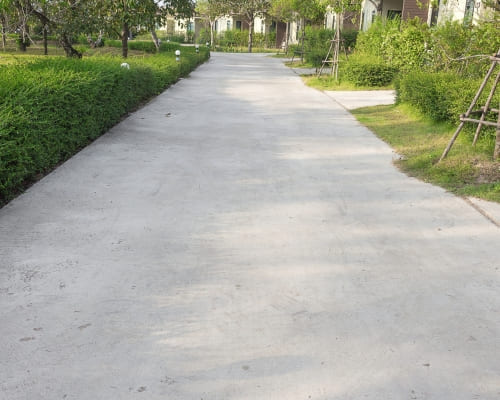
The kerb side of the work is structural rather than decorative. A kerb takes wheel loads, protects the edge of a slab, and in a commercial setting directs traffic and water.
Driveway kerbs
The edge of a driveway slab is its weakest point, because there is no lateral support beyond it. A kerb cast alongside, or a thickened edge formed as part of the pour, stops the slab edge breaking away under a tyre that drops off it. On a driveway with lawn on both sides a kerb also keeps the grass out and gives a clean line to mow to. Construction of the driveway itself is covered on the concrete driveways page.
Pin kerbs and edge strip kerbs
A pin kerb is a small kerb section held in place with steel pins driven into the base, used where a light edge restraint is needed against paving or asphalt without a full poured kerb. An edge strip kerb is a narrow continuous strip performing the same restraint job in one piece. Both are chosen where the requirement is to stop a pavement edge spreading rather than to carry a wheel.
Precast or poured in place
Precast kerb units are made offsite and bedded into position, which suits a long straight run on a prepared base and gives a very consistent profile. Poured in place is formed and cast on site, which handles curves, changes of level and tie-ins to existing concrete that precast cannot follow without cutting. Poured work also has no joints between units for weeds to find. Which is better comes down to the geometry of the run, and both are priced where a job could go either way.
Commercial and car park kerbing
Car parks, laneways and commercial frontages use kerbing to define bays, protect landscaping, stop vehicles overrunning a boundary and channel stormwater to pits. These runs are set out from a drawing with levels taken off the drainage design, since a kerb laid without regard to the fall simply ponds water. Barrier, semi-mountable and mountable profiles are all formed, with the choice driven by whether vehicles are meant to cross the line.
Peak Concreting Bendigo
How Concrete Edging Is Laid: Hand-Formed Or Machine Extruded
Edging is laid two ways, and which one is used changes the appearance, the cost and what the run can do.
Preparation, common to both
The line is set out and checked against the garden, the path or the driveway it serves, then the trench is dug and the base compacted. Grass and roots are stripped out, because organic material under a narrow element rots and leaves it unsupported. Levels are run with a string line or a laser so the top of the finished edge is true, which on a flush mower strip has to be accurate to a few millimetres.
Hand-formed
Formwork is set to the line and the concrete placed, compacted and finished by hand. This is the method for curves, changes in height, steps, tie-ins to existing concrete, decorative profiles and anything with colour or a patterned top. It takes longer per metre and costs more, and it is the only option on an irregular job.
Machine extruded
A kerbing machine extrudes a continuous profile through a mould as it travels along the prepared base, laying a long run quickly with a very consistent cross-section. It suits long, gently curving runs with a constant profile and is markedly cheaper per metre on those. The trade-offs are that the profile is fixed by the mould, tight radii and sharp changes of direction cannot be followed, and the machine needs clear access along the whole line.
Finishing and curing
The top and the exposed face are finished to the agreed texture, control joints are tooled along the run, and the element is cured rather than left to dry out, which on a thin section in a Bendigo summer matters more than it does on a slab. Backfilling against the edge is held off until the concrete has gained enough strength to take the pressure of soil and mulch.
Peak Concreting Bendigo
What Concrete Kerbs And Edging Cost In Bendigo, Per Linear Metre
Kerbs and edging are quoted per linear metre, which makes them straightforward to compare between quotes provided the profile and height are stated. The figures below are indicative for the Bendigo area; a written quote on site replaces them with a fixed price.
Indicative cost per linear metre
A machine-extruded plain garden edge or mower strip generally runs from around $45 to $75 per linear metre. Hand-formed plain edging typically falls between about $65 and $110, reflecting the extra labour. Coloured, stencilled or exposed finishes add roughly $15 to $35 per metre. A reinforced driveway kerb, being wider and deeper, commonly sits between $90 and $150. Short runs carry a minimum charge, because set-up and a minimum concrete delivery apply regardless of length.
What moves the price
Run length is the largest factor, since set-up is a fixed cost and the rate per metre drops considerably past about 30 metres. After that: hand-formed against machine extruded, the profile and height, the finish, how much excavation and spoil removal the line needs, whether an existing timber, plastic or concrete edge has to be removed and carted away, access along the run for a machine or a barrow, and the number of curves and level changes.
Measured against the alternatives
Against timber, concrete costs more up front and does not have to be replaced in five to ten years when the timber rots. Against plastic edging it is several times the price and lasts indefinitely rather than lifting and going brittle. Against brick or block edging it is usually cheaper to install, has no mortar joints to fail and no units to be pushed out of line by roots.
Peak Concreting Bendigo quotes every run in writing with the profile, height, finish and method stated, so quotes can be compared on specification. Call 0485 072 026.
TESTIMONIALS
What Our Concrete Kerbs & Edging Customers Say About Us
The Process
3 Step Process For Your Concrete Kerbs & Edging Needs

Free Quote
A call or a form message starts it. A site visit follows to measure up, check access and assess the ground or the existing slab, and a fixed written price comes back with the scope spelled out.

Preparation
Preparation is matched to the job quoted: excavating and compacting a base and setting formwork and steel for a new pour, or grinding, cleaning and priming the surface where the work goes over concrete already in the ground.

Finish And Clean-Up
The chosen finish is worked and then protected, with joints cut and curing managed on a new pour or the surface sealed on an overlay or polish, and the site left clean and ready to use.
Concrete Kerbs & Edging In Bendigo
FREQUENTLY ASKED QUESTIONS
Everything you need to know about our Concrete Kerbs & Edging In Bendigo
How much does concrete garden edging cost per metre in Bendigo?
As an indicative guide, machine-extruded plain garden edging or a mower strip runs from around $45 to $75 per linear metre in the Bendigo area. Hand-formed plain edging typically falls between $65 and $110 per metre because of the extra labour, and coloured, stencilled or exposed finishes add roughly $15 to $35 per metre. A reinforced driveway kerb is wider and deeper and commonly sits between $90 and $150. Short runs carry a minimum charge, since set-up and a minimum concrete delivery apply whatever the length, and the rate per metre drops noticeably past about 30 metres. Call 0485 072 026.
What is a mower strip and is it worth it?
A mower strip is a low concrete band laid flush with the lawn so the mower wheel runs along it and the blade clears the edge in a single pass, which removes hand edging as a separate job. It is worth it wherever lawn meets a garden bed, a fence or a wall and the edge currently has to be re-cut every few weeks. Width is set by the mower, usually 100mm to 150mm, and the critical detail is that the top finishes dead level with the turf, because even 10mm of height catches the mower deck and defeats the purpose. Call 0485 072 026.
Is concrete edging better than timber or plastic?
For longevity, yes, and that is usually the deciding factor. Timber rots and is eaten from below, plastic goes brittle under Bendigo's ultraviolet and lifts at the joins, and steel rusts at ground level where it stays damp. Concrete is poured as one continuous element with no joints for grass runners to find, it is not pushed out of line by root growth, and it does not need replacing. It costs more up front than timber or plastic and less than brick or block edging to install. The trade-off is that it is permanent, so the line is worth setting out carefully. Call 0485 072 026.
Can concrete edging follow curves?
Yes, and this is where it beats pavers, blocks and bricks, which have to be cut or gapped around a radius. Because concrete is formed rather than laid in units, a curve costs the same per metre as a straight run. Smooth continuous curves, circular beds and tree rings are formed in flexible formwork. The one limitation is method: a kerbing machine extrudes a fixed profile and cannot follow a tight radius or a sharp change of direction, so curved and irregular work is hand-formed. That is quoted at the hand-formed rate rather than the machine rate. Call 0485 072 026.
How high can concrete edging be before it becomes a retaining wall?
As a practical guide, an edge retaining up to about 200mm of soil is still edging and needs no engineering beyond reinforcement and a sound base. Beyond that the element starts taking real lateral pressure from the soil behind it, and it becomes a retaining wall, which needs to be designed for that load with appropriate footings and drainage behind it. Pouring a tall garden edge and treating it as edging is a common mistake, and it fails by rotating outward at the base after the first wet winter. Retaining work is covered on the concrete retaining walls page. Call 0485 072 026.
How long before I can backfill against new concrete edging?
Generally around seven days, though it depends on the weather and the size of the element. Backfilling too early puts lateral pressure on concrete that has not gained strength, which can rotate a narrow edge out of line or crack it along the run. Light mulch against a flush mower strip is lower risk than built-up soil against a 150mm border. Thin sections also need curing rather than being left to dry, which matters more here than on a slab because the surface-area-to-volume ratio is high and a Bendigo summer dries them fast. Call 0485 072 026.
Request A Free Concrete Kerbs & Edging Quote
GET A FREE QUOTE
BUSINESS
SERVICES
OPERATING HOURS
Sun: 6:00am - 10:00pm
Mon: 6:00am - 10:00pm
Tue: 6:00am - 10:00pm
Wed: 6:00am - 10:00pm
Thu: 6:00am - 10:00pm
Fri: 6:00am - 10:00pm
Sat: 6:00am - 10:00pm